

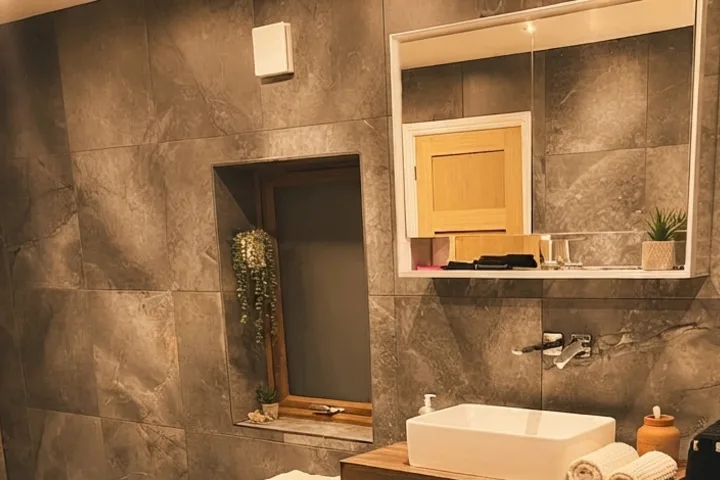
Warm light against gray tile
The concept warms the existing surfaces instead of disguising them. It is a mood comparison, not a lighting calculation.
Use AI bathroom design to test tile, vanity, color, or lighting in your real bathroom.
Name the fixtures, openings, tile, or plumbing locations that must stay before testing a new look.
Design my bathroom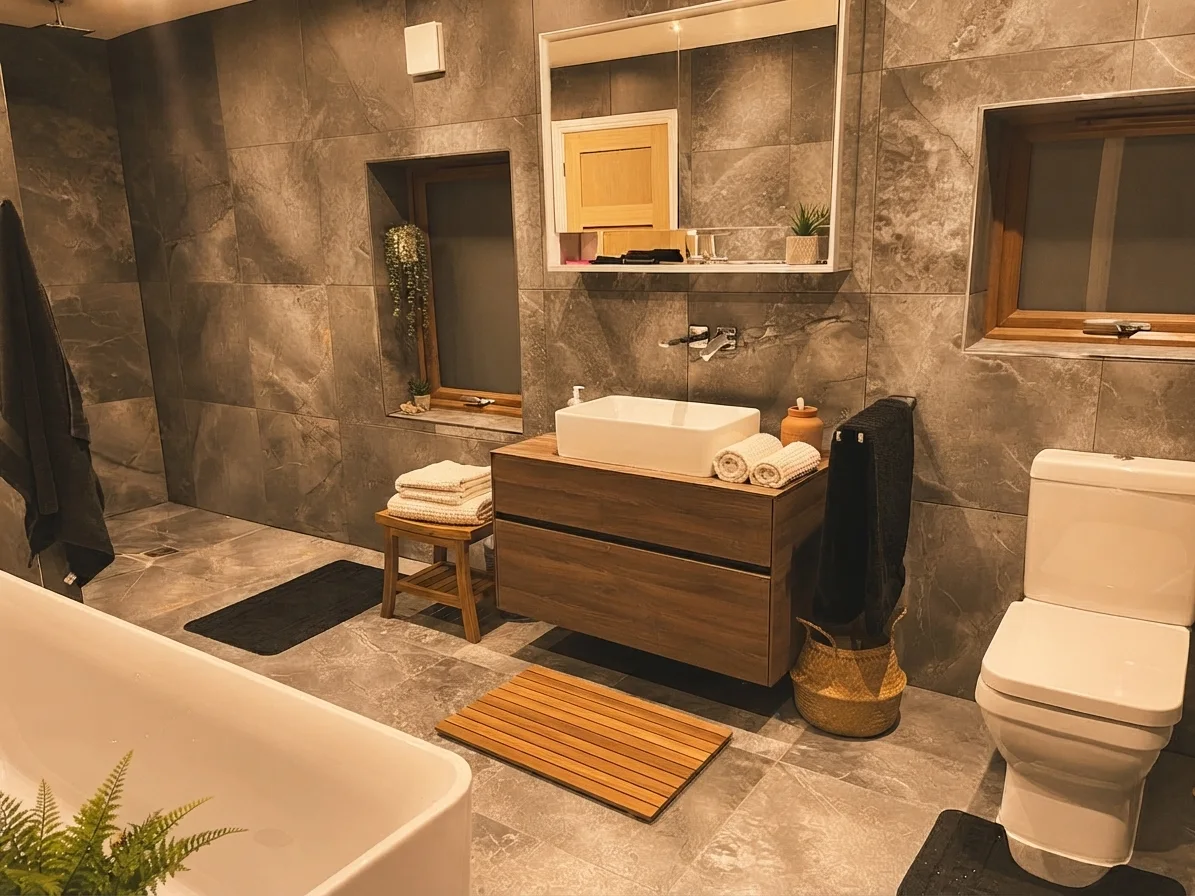
Upload a clear bathroom photo, name one visible change, and protect fixed fixtures. AI bathroom design returns inspiration, not a specification or safety check.
Upload a room photo or choose a sample to begin
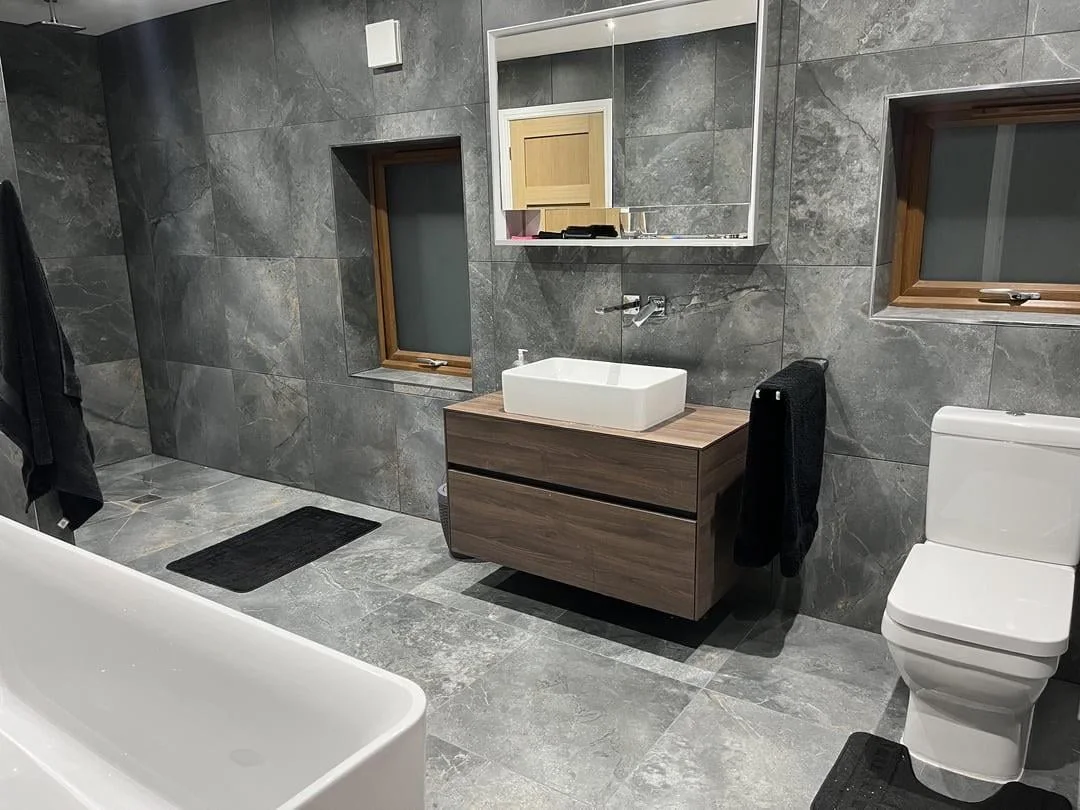
A public Reddit post described a recently renovated gray bathroom that felt sterile but could not be demolished. We tested whether removable warmth could change the mood.
“The bathroom is sterile, bland, and overwhelmingly gray, but ripping out a recent renovation is not an option.”Read the original Reddit request
Add warm 2700K light, white textured towels, teak accents, baskets, and restrained plants. Replace no tile, vanity, tub, toilet, window, door, or plumbing.
The room reads warmer through light, wood, texture, and greenery while the gray envelope, vanity, tub, toilet, openings, and viewpoint remain recognizable.
Community photo used for a transparent product demonstration. The generated image is an AI concept, not a measured plan, product recommendation, or claim that every protected detail is exact.
Light · texture · storage
Compare light, texture, and storage against the gray tile that must stay.
The concept warms the existing surfaces instead of disguising them. It is a mood comparison, not a lighting calculation.
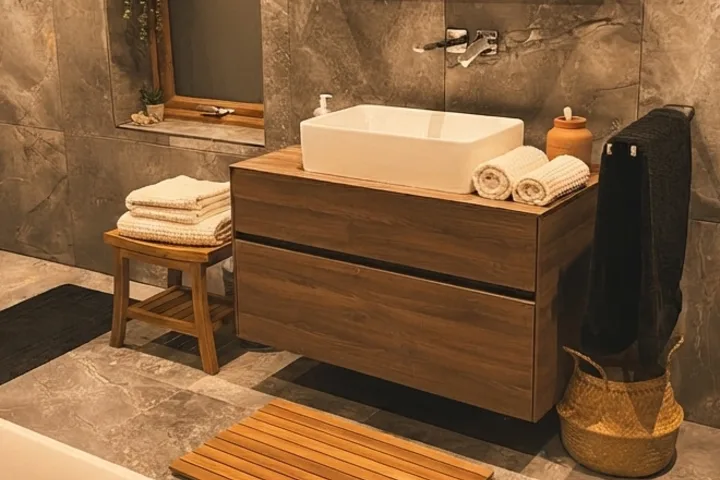
Towels, a stool, a mat, and baskets interrupt the hard surfaces with removable texture and wood.
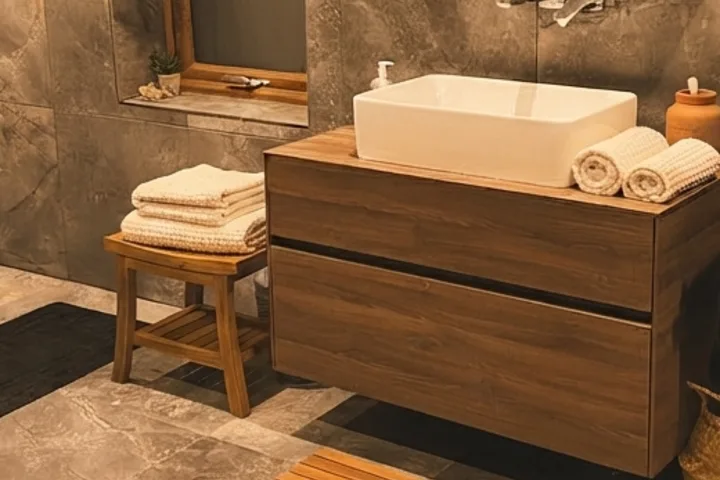
The vanity remains, while nearby storage and textiles make the composition feel less severe and more lived in.
One room. One visual decision.
AI bathroom design starts with the real room, one visual change, and protected fixed fixtures. Use the result to narrow a direction—not to approve wet-room work.
Use a bright, straight view of the tub or shower, vanity, toilet, floor, walls, windows, and doors.
Name the finish, mirror, lighting, or decor change, then list the fixtures and surfaces that stay.
Compare the visual direction, then verify dimensions, wet-area products, services, and local requirements separately.
Use AI bathroom design on one room view to compare directions before they become a product list or construction decision.
Test a quieter vanity, mirror, metal, or light direction with the tile you keep.
Test warmer light, textiles, wood, and plants while keeping expensive tile and fixtures.
Protect fixed fixtures and test removable layers such as towels, lighting mood, storage, art, and plants.
Use AI bathroom design to compare broad relationships, then verify whether any material or installation suits a wet room.
Compare major surface colors, then confirm the final palette with physical samples.
Preview mirror and light mood; verify fixture zones, wiring, brightness, glare, and compliance separately.
Keep tile and fixtures while testing paint, finish, storage, mirror shape, and decor.
Explore a coordinated finish story, then independently verify every fixture and material without assuming products are suitable or available.
A bathroom photo hides plumbing, drainage, waterproofing, ventilation, electrical zones, and access. Protect fixed locations and keep the request visual. A focused prompt separates an atmosphere or finish question from a decision about wet-area work, cost, or room geometry.
When fixtures stay recognizable, you can judge light, color, storage, and finish without confusing a surface question with a layout change. Keep the original beside the result, note any drift, and use those observations to refine the brief before buying products or calling a professional. It also gives a contractor or designer a more specific visual brief without pretending that a concept image has resolved the work.
Six recurring Reddit questions cover clinical gray rooms, keeping tile, avoiding a gut renovation, and making small baths warmer—plus where wet-room checks begin.